
Introduction
Overview of Rapid Technological Evolution
Technology is evolving at an unprecedented pace, reshaping how we live, work, and interact with the world around us. Breakthroughs in areas such as artificial intelligence, automation, biotechnology, and digital connectivity are no longer distant possibilities—they are actively transforming industries and societies in real time. What once took decades to develop and adopt can now emerge and scale globally within a few years.
Why Understanding Future Tech Trends is Important
Understanding future technology trends is essential because these changes influence far more than just gadgets or software. They redefine business models, create and eliminate job roles, and alter the skills needed to succeed in the workforce. Keeping track of emerging technologies allows individuals and organizations to anticipate challenges and seize opportunities rather than being caught off guard.
Strategic Decision-Making
For businesses, awareness of technological trends supports strategic planning and innovation. Companies that anticipate changes can develop new products, optimize operations, and maintain a competitive edge.
Career Planning and Skill Development
For professionals, understanding future tech trends helps in acquiring relevant skills, adapting to new roles, and ensuring long-term employability in a rapidly shifting job market.
Everyday Life and Society
On a personal and societal level, emerging technologies affect daily life—from how we communicate and travel to how we manage health and personal finances. Staying informed helps individuals make better choices, embrace opportunities, and mitigate potential risks.
Impact on Businesses, Careers, and Daily Life
The influence of technology is multi-dimensional:
- Businesses: Automation, AI, and digital platforms are transforming operations, customer engagement, and market competition.
- Careers: Roles are evolving, requiring continuous learning and adaptation, with new job categories emerging while others become obsolete.
- Daily Life: Smart homes, wearable devices, and AI-driven services are increasingly integrated into everyday routines, changing how we interact with our environment and with each other.
Artificial Intelligence & Machine Learning
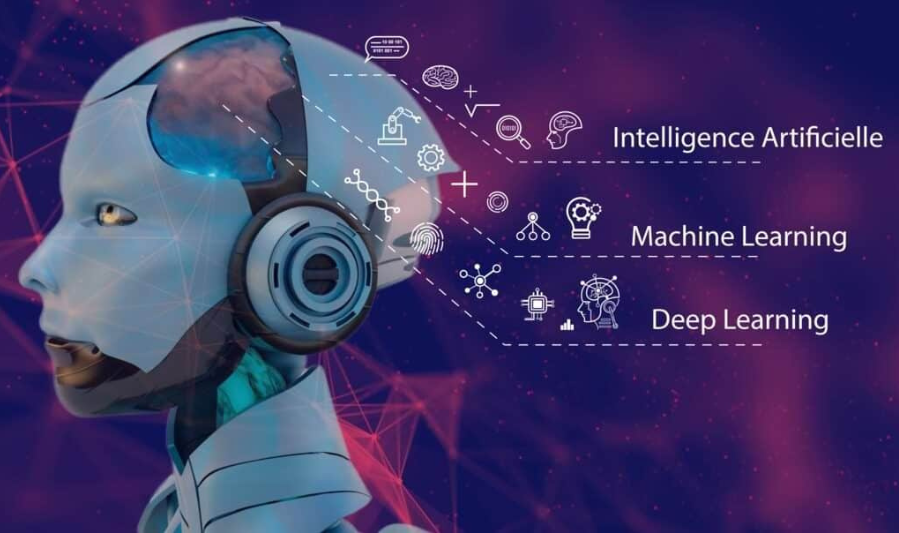
Evolution of AI and ML
Artificial Intelligence (AI) and Machine Learning (ML) have evolved from theoretical concepts to practical tools that impact nearly every industry. Early AI focused on rule-based systems capable of performing narrow tasks, while modern AI leverages ML to identify patterns, learn from data, and make predictions without explicit programming. Recent advancements, particularly in deep learning and neural networks, have enabled AI to tackle complex problems like natural language processing, image recognition, and autonomous decision-making.
AI in Business Automation and Decision-Making
Businesses are increasingly relying on AI to streamline operations, improve efficiency, and support strategic decisions. Key applications include:
Process Automation
AI-powered systems automate repetitive tasks such as data entry, customer support, and supply chain management, allowing employees to focus on higher-value work.
Enhanced Decision-Making
By analyzing large volumes of data, AI provides actionable insights that help organizations make faster and more informed decisions, from financial forecasting to market trend analysis.
Generative AI and Future Possibilities
Generative AI, including advanced models for text, image, audio, and video creation, is opening entirely new possibilities. It can assist in:
- Content creation for marketing, design, and entertainment
- Personalized product recommendations and virtual assistants
- Accelerating scientific research by simulating experiments and generating hypotheses
The future potential of generative AI extends beyond automation, enabling innovations that were previously limited by human capacity or creativity.
Ethical Concerns and Responsible AI
While AI offers transformative benefits, it also raises ethical and societal challenges:
Bias and Fairness
AI systems can inadvertently reinforce biases present in their training data, leading to unfair outcomes in hiring, lending, law enforcement, and other areas.
Privacy and Security
The collection and analysis of massive datasets can compromise privacy and expose sensitive information if not handled responsibly.
Accountability and Transparency
Ensuring AI decisions are explainable and accountable is critical, particularly in high-stakes applications such as healthcare, finance, and autonomous vehicles.
Promoting responsible AI development involves creating ethical guidelines, continuous monitoring, and regulatory frameworks that balance innovation with societal well-being.
Internet of Things (IoT) & Smart Ecosystems
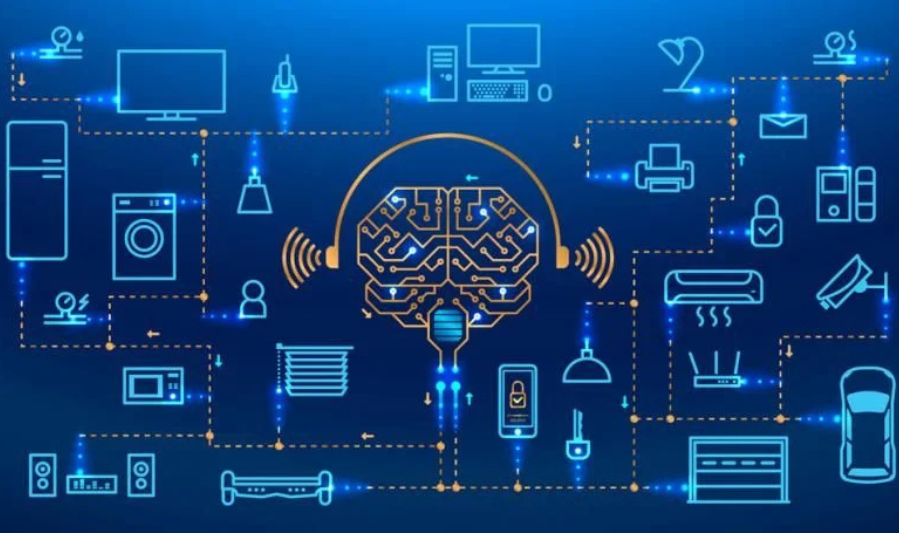
Expansion of Connected Devices
The Internet of Things (IoT) refers to a network of physical devices embedded with sensors, software, and connectivity, enabling them to collect, exchange, and act on data. From wearable fitness trackers to industrial sensors, the number of connected devices is growing exponentially. This expansion allows seamless communication between devices and systems, creating smarter, more efficient ecosystems that enhance decision-making and automation.
Smart Homes, Cities, and Industries
IoT technology is reshaping environments at multiple levels, from personal living spaces to entire cities and industries.
Smart Homes
IoT-enabled devices such as smart thermostats, lighting systems, security cameras, and appliances allow homeowners to automate routines, monitor energy usage, and improve safety. Voice-activated assistants and integrated apps make managing daily life easier and more efficient.
Smart Cities
Urban environments are increasingly using IoT to optimize traffic management, energy consumption, waste disposal, and public safety. Sensors, cameras, and data analytics improve the quality of life for residents while reducing operational costs for municipalities.
Industrial IoT (IIoT)
In industries, IoT enables predictive maintenance, real-time monitoring of machinery, and supply chain optimization. This leads to higher productivity, reduced downtime, and more sustainable resource management.
IoT Security and Data Privacy
With billions of connected devices, IoT systems face significant security and privacy challenges:
Cybersecurity Threats
IoT devices are often targeted by hackers due to weak encryption or default settings, posing risks to personal, corporate, and critical infrastructure data.
Data Privacy
Collecting massive amounts of user data raises concerns about consent, ownership, and misuse. Ensuring robust data governance and secure storage is critical for building trust in IoT ecosystems.
Future of Real-Time Data Systems
The growth of IoT is driving the evolution of real-time data systems, enabling instant insights and actions. From autonomous vehicles reacting to traffic conditions in milliseconds to healthcare systems monitoring patient vitals continuously, IoT is creating highly responsive environments. As connectivity, AI, and edge computing advance, IoT ecosystems will become more intelligent, predictive, and integrated across personal, urban, and industrial domains.
Blockchain & Web3 Technologies
Blockchain Beyond Cryptocurrency
Blockchain technology is best known as the foundation of cryptocurrencies, but its applications extend far beyond digital money. At its core, blockchain is a decentralized, immutable ledger that securely records transactions across multiple nodes. This makes it ideal for industries requiring transparency, traceability, and trust. Applications now include supply chain management, voting systems, identity verification, and healthcare record management, among others.
Decentralized Finance (DeFi)
Decentralized Finance (DeFi) uses blockchain to create financial systems that operate without traditional intermediaries like banks or brokers.
Key Features
- Peer-to-peer lending and borrowing
- Decentralized exchanges for trading assets
- Smart contracts that automate transactions without third-party intervention
DeFi has the potential to democratize access to financial services, reduce costs, and increase transparency. However, it also carries risks such as regulatory uncertainty and smart contract vulnerabilities.
NFTs and Digital Ownership
Non-Fungible Tokens (NFTs) are unique digital assets stored on a blockchain that verify ownership and provenance.
Applications
- Art and collectibles
- Gaming assets and virtual goods
- Intellectual property and licensing
NFTs enable creators to monetize digital content directly and provide users with verifiable ownership in digital ecosystems. They are reshaping concepts of value and ownership in the digital age.
Web3 and the Future of the Internet
Web3 represents a vision of a decentralized internet where users control their data, digital identities, and online interactions.
Key Principles
- User-owned data and privacy
- Decentralized applications (dApps)
- Token-based incentives for participation and governance
By shifting power from centralized platforms to individuals, Web3 could redefine social networks, e-commerce, and online collaboration. The technology is still evolving, but it promises a more transparent, equitable, and secure digital landscape.
5G & Next-Generation Connectivity
Role of 5G in Future Technologies
5G, the fifth generation of mobile networks, is a transformative technology designed to provide faster data speeds, lower latency, and greater connectivity compared to previous generations. Beyond enabling high-quality video streaming and communication, 5G serves as the backbone for emerging technologies like IoT, AR/VR, autonomous systems, and AI-driven applications. Its ultra-reliable, high-speed connections make real-time data exchange possible, accelerating innovation across industries.
Impact on IoT, AR/VR, and Smart Cities
The capabilities of 5G are driving significant advancements in connected ecosystems:
Internet of Things (IoT)
5G allows massive IoT networks to function efficiently, supporting billions of connected devices with low latency and high reliability. This enhances smart homes, industrial automation, and real-time monitoring systems.
Augmented and Virtual Reality (AR/VR)
High-speed, low-latency 5G networks make immersive AR/VR experiences feasible on a large scale. Applications include remote education, virtual collaboration, telemedicine, and interactive entertainment.
Smart Cities
5G empowers smart city infrastructure with real-time traffic management, energy optimization, and enhanced public safety. It enables instant communication between sensors, vehicles, and city management systems, improving urban efficiency and sustainability.
Preparing for 6G Networks
While 5G adoption is accelerating globally, research into 6G is already underway. 6G promises even higher speeds, near-zero latency, and more advanced integration of AI and edge computing. Preparing for 6G involves:
- Upgrading infrastructure to support higher-frequency communications
- Developing applications that leverage ultra-low latency and high bandwidth
- Establishing global standards and regulatory frameworks for interoperability and security
The evolution from 5G to 6G will unlock new possibilities, from holographic communication to fully autonomous transportation systems, further shaping the digital future.
You may also like to read these posts:
How to Hire Talent: A Step-by-Step Guide for Employers
Top Employee Workplace Trends Shaping the Future of Work
Beginner Workout Plans: A Complete Guide to Start Your Fitness Journey
Breaking Latest Technology News from Around the World
Green Technology & Sustainability
Clean Energy Innovations
Green technology is driving the transition toward renewable and low-carbon energy sources. Innovations in solar, wind, hydro, and emerging technologies like hydrogen fuel cells are making clean energy more efficient and cost-effective. Smart grids and energy storage solutions enable better distribution and management, reducing reliance on fossil fuels and lowering greenhouse gas emissions.
Electric Vehicles and Smart Transportation
The transportation sector is undergoing a significant shift with the rise of electric vehicles (EVs) and connected mobility solutions.
Electric Vehicles (EVs)
EVs reduce carbon emissions, improve urban air quality, and lower dependence on fossil fuels. Advances in battery technology, charging infrastructure, and vehicle-to-grid integration are making EV adoption increasingly practical.
Smart Transportation
IoT-enabled traffic management, autonomous vehicles, and shared mobility platforms optimize transportation efficiency, reduce congestion, and minimize environmental impact. These innovations are crucial for sustainable urban planning and logistics.
Sustainable Data Centers
Data centers are critical for modern digital infrastructure but are also energy-intensive. Green technology is transforming data centers through:
- Renewable energy-powered operations
- Energy-efficient cooling systems
- AI-driven resource management for optimized power usage
These measures reduce carbon footprints while maintaining high-performance computing capabilities.
Tech-Driven Climate Solutions
Beyond energy and transportation, technology is addressing climate change through innovative solutions:
- AI for climate modeling – Predicting weather patterns and assessing environmental risks
- IoT environmental monitoring – Tracking air quality, water levels, and biodiversity
- Blockchain for carbon tracking – Verifying emissions reductions and promoting sustainability in supply chains
By integrating technology with sustainability initiatives, businesses, governments, and individuals can take more effective action to combat climate change and promote a greener future.
Faqs:
What are future tech trends?
Future tech trends are emerging technologies and innovations that are expected to shape industries, lifestyles, and the global economy in the coming years.
Which technologies will dominate the future?
Artificial Intelligence (AI), the Metaverse (AR/VR), Internet of Things (IoT), blockchain, 5G connectivity, and green technology are expected to dominate the tech landscape.
How will future technology impact businesses?
Future technologies will improve efficiency, automate processes, enhance customer experiences, and create new business opportunities while reducing costs.
Are there any risks associated with future tech trends?
Yes, risks include cybersecurity threats, data privacy concerns, job displacement due to automation, and ethical challenges in AI and other technologies.
How can individuals prepare for future tech trends?
Staying updated with new skills, embracing lifelong learning, understanding emerging technologies, and being adaptable to change are key to thriving in a tech-driven future.
Conclusion:
The rapid evolution of technology is reshaping every aspect of human life, from business operations to personal routines. Innovations in Artificial Intelligence and Machine Learning are automating tasks, enhancing decision-making, and opening creative possibilities through generative AI. The Metaverse, AR, and VR are redefining interaction, education, and work, while IoT and smart ecosystems connect devices and systems to create more efficient, data-driven environments. Blockchain and Web3 technologies are transforming trust, ownership, and financial systems, while 5G and next-generation connectivity provide the infrastructure to support these innovations at scale.